

Bands are compact and easy to store; adjustable dumbbells provide a more familiar free-weight feel and a defined load. Choose for the exercises you will repeat and the setup you can use safely.
If you want to add strength work at home, resistance bands and adjustable dumbbells solve different storage and training problems. Bands take little space and can be moved easily. Dumbbells provide a familiar free-weight feel, but they need a stable storage spot and enough room to lift safely.
Neither tool is automatically more effective for every person or exercise. The American College of Sports Medicine’s 2026 resistance-training guidance emphasizes choosing an approach people can maintain, and recognizes bands, bodyweight, and home-based routines as useful options. This is an equipment comparison, not an individualized workout plan; ReviewClearly has not tested the products pictured.
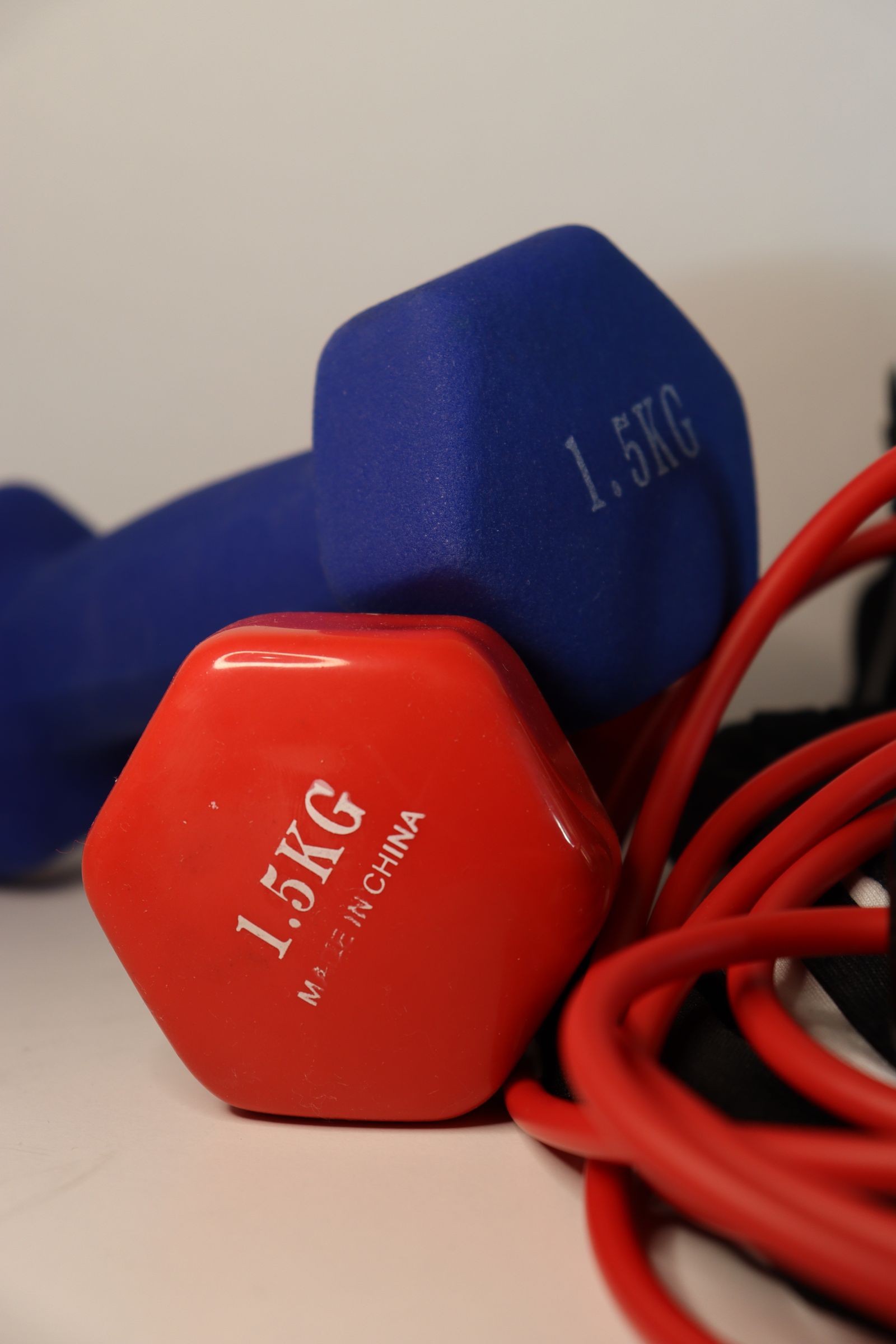
Compare the trade-offs
| Consideration | Resistance bands | Adjustable dumbbells |
|---|---|---|
| Storage | Compact; many sets fit in a drawer or small bag | Heavier and bulkier; need a stable floor or rack space |
| Setup | Anchor or hold the band securely; tension changes with stretch | Select and lock the required plates or weight setting according to the maker’s instructions |
| Feel | Tension changes through the movement and depends on band stretch | Load feels more consistent through many movements |
| Progression | Compare band type, length, and tension; exact labels differ by maker | Compare the available weight range and increments |
| Versatility | Useful for many pulling, pressing, and mobility movements | Useful for a broad range of loaded exercises, depending on available weights and space |
| Main checks | Inspect for wear and follow safe anchoring instructions | Confirm secure locks, floor protection, storage, and safe lifting space |
Bands: the compact choice with setup checks
Bands make sense when space is limited, when you want something easy to put away, or when your routine includes movements that use elastic tension. Sets can include loops, long bands, or handles; those formats are not interchangeable for every exercise.
Before buying, check the band’s material, length, resistance labeling, included handles or anchors, and care instructions. Color alone is not a reliable comparison across brands. Inspect bands before use, keep them away from sharp edges, and follow the maker’s directions for door anchors or other attachment points. If the band slips or shows cracking, stop using it.
Adjustable dumbbells: a defined load in a smaller footprint
An adjustable set can replace several pairs of fixed dumbbells while taking less space than a full rack. It is still a heavy item: check the set’s total weight, minimum and maximum settings, adjustment increments, handle dimensions, and how the locking system works. Read the assembly, lifting, and storage instructions before use.
Consider how you will move around the set and where you will place it between exercises. If you share a small room, a stand or storage tray may be as important as the dumbbells themselves. Check the seller’s warranty and return terms, particularly for a large shipment.
Which one should you choose?
Choose bands if portability and low storage needs are your main constraints and the movements you plan to do work with elastic resistance. Choose adjustable dumbbells if you prefer free weights, want more precise load options, and have a safe place to store and use them. If you are unsure, begin with the simplest tool that supports a routine you already enjoy instead of buying a full kit.
If you already have a mat and clear floor space, try a few bodyweight movements first. That can help you identify which equipment would fill a real gap. A qualified exercise professional can help adapt a routine to your goals or limitations; consult a health professional if you have a health concern or pain with activity.
The ACSM home-gym guide discusses resistance bands as a space-conscious option, while its 2026 resistance-training summary stresses a consistent, sustainable routine. Read the equipment manufacturer’s safety directions and start within your ability.
Sources
General editorial guidance. No hands-on product testing or affiliate links are included.