
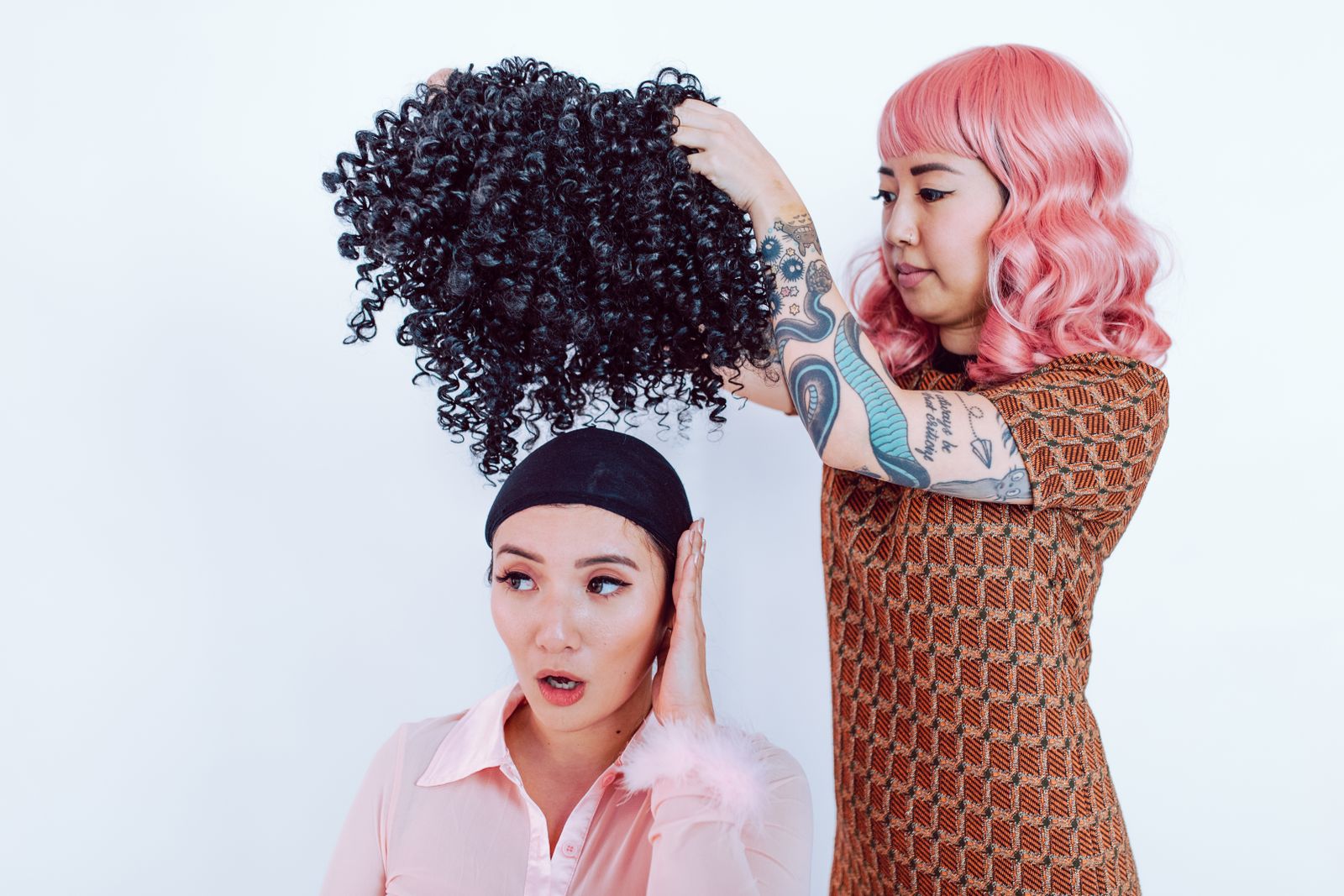
Human hair offers more styling flexibility and usually asks for more upkeep; synthetic fiber can be easier to maintain and comes in ready-made styles. The better fit depends on how you plan to wear and care for it.
Choosing a wig is easier when you start with the way you want to wear it. Do you want a style that is ready after a quick shake, or do you enjoy changing the part, shape, or finish? Will you wear it often, pack it for travel, or keep it for occasional events? Those everyday details can matter more than a long list of marketing terms.
Human-hair and synthetic wigs can both be comfortable, attractive options. Neither is automatically the right choice for everyone. This guide compares the practical trade-offs using published care and selection guidance; ReviewClearly has not purchased or tested the wigs pictured here.
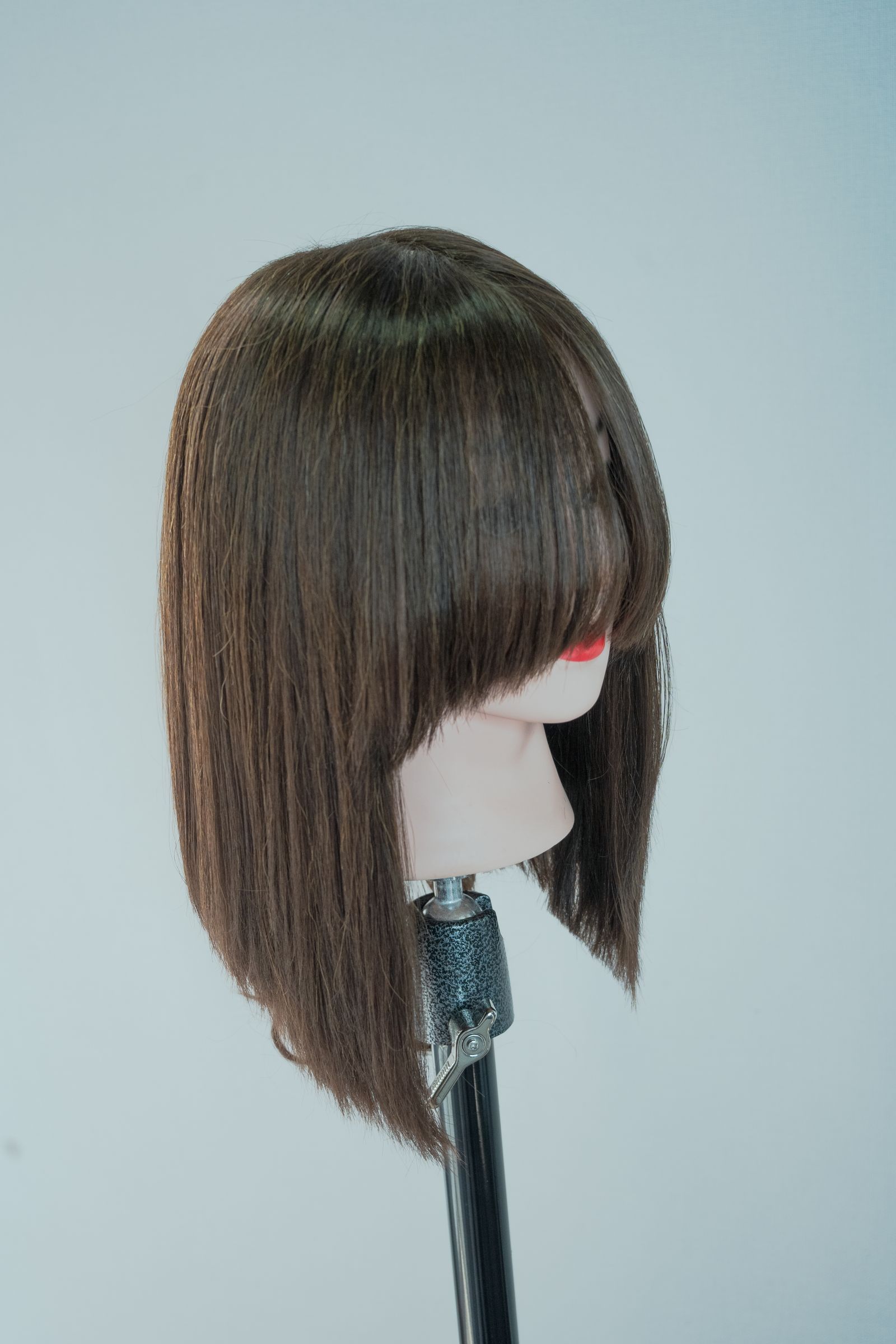
The main difference is how much styling control you want
Human-hair wigs are made with real hair. They can generally be restyled more like natural hair, but that flexibility comes with more day-to-day care. Heat, humidity, washing, and styling can change how the hair looks, so owners need to follow the wig maker’s care instructions and allow time for styling.
Synthetic wigs are made with manufactured fibers. Many are sold in a set style that returns to shape after washing and drying, which can make the morning routine simpler. They may offer less flexibility for restyling. Heat tolerance is not universal: only use hot tools if the specific wig is expressly labeled heat-friendly and the maker provides a safe temperature range.
The American Cancer Society’s wig guide describes both fiber types and notes the different care and styling considerations. It also advises shoppers to check sizing and return terms with the seller because policies vary.
A practical comparison
| What matters | Human hair | Synthetic fiber |
|---|---|---|
| Styling | More flexibility for changing the style, subject to the hair and construction | Often easiest when you like the preset shape; heat use depends on the exact fiber |
| Routine | Usually needs more styling and careful handling | Often needs less daily restyling, but still needs gentle washing and storage |
| Budget | Commonly a higher upfront purchase; compare the full cost and care needs | Often a lower-cost starting point, though quality and construction vary widely |
| Color and finish | Offers natural-hair variation; salon changes should be discussed with a wig professional | Available in a broad range of pre-set colors and styles; dyeing is generally not appropriate |
| Best question to ask | “Will I maintain and style this regularly?” | “Do I like this style enough to wear it as made?” |
These are broad patterns, not guarantees. Fiber quality, cap construction, density, length, and how often a wig is worn affect the experience. A high price does not by itself prove a better fit or more comfortable cap.
Choose for your actual week
If you want a consistent look with little styling before work or school, a synthetic option may be appealing. Look for clear care directions, a size chart, and explicit wording about heat resistance. If the listing is vague about hot tools, assume heat is not safe until the seller confirms otherwise.
If you enjoy styling and are willing to spend time on maintenance, human hair may be worth comparing. Ask what the listing means by “human hair,” what care products the maker recommends, and whether the wig can be colored or chemically processed. Do not assume every wig can tolerate the same treatment.
For travel, think about how the style handles packing, weather, and touch-ups. For frequent wear, consider whether you have time to wash, dry, and store the wig properly. If the wig is for hair loss or a sensitive scalp, comfort and fit deserve as much attention as appearance; a qualified wig fitter or care professional can help you assess options.
Check the cap and seller before paying
Fiber is only one part of the decision. Measure your head according to the brand’s instructions, inspect the cap features, and check whether the piece can be adjusted. Read the return policy carefully, especially rules for trying on or removing lace. Hygiene-related restrictions can make a wig difficult or impossible to return once opened or altered.
Before ordering, save the exact product description and care directions. Confirm whether the listed images show the same color, length, density, and cap configuration you will receive. If a seller cannot explain a feature in plain language, pause and ask before checkout.
A simple decision rule
Choose human hair when styling choice and a natural-hair routine matter enough to justify extra care and cost. Choose synthetic when you prefer a ready-made style and simpler day-to-day maintenance. If you are unsure, start by comparing the cap fit and care label on two specific options rather than choosing by fiber name alone.
For the next step, see our guide to wig cap construction, lace, and density, then use the beginner wig-care routine to plan how you will look after the piece.
Sources
General editorial guidance. No hands-on product testing or affiliate links are included.