
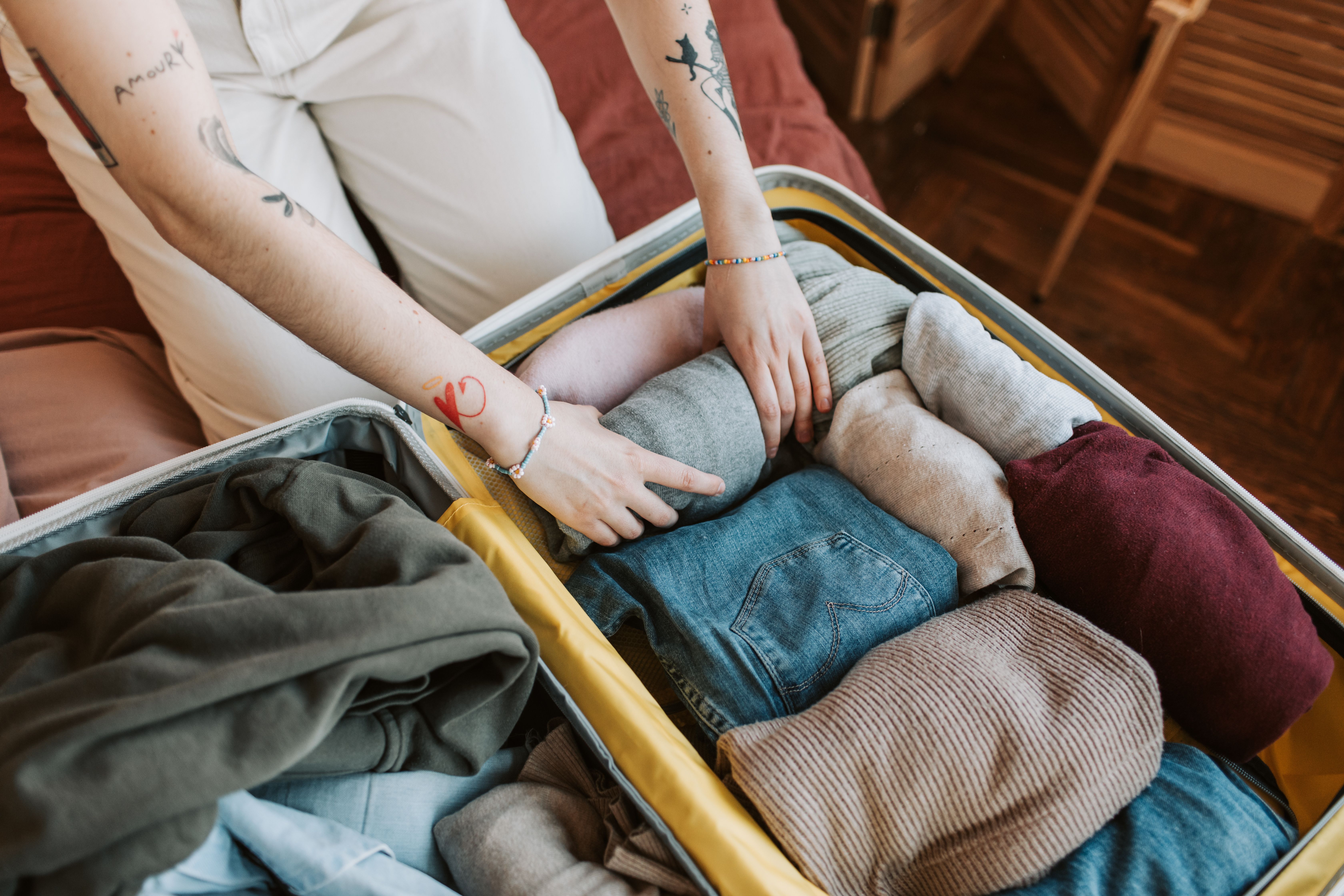
Buy small travel accessories when they solve a real packing problem; wait on a large suitcase only if you do not need it for an upcoming trip and can accept fewer choices later.
Thanksgiving travel is close enough that a new suitcase or organizer should solve a problem you already have—not create another shopping project. For this guide, “buy now” means an item is useful for a trip in the next few weeks or has a seasonal buying window worth watching. It does not mean every traveler needs it, or that a discount is guaranteed.
Google’s 2026 holiday buying guide, based on last year’s U.S. merchant search and discount patterns, points to a split: travel accessories and packing cubes often see stronger deals in November, while large suitcases may reach deeper clearance prices in late December. That can make waiting sensible for a future trip, but a poor trade if you need the bag for Thanksgiving or want a specific size or color. Read Google’s timing notes.
The short answer
Buy an organizer, crossbody bag, neck pillow, or other small accessory when it fixes a concrete annoyance and you can check fit, return terms, and delivery timing. Consider waiting on a large suitcase if your next trip is not soon and you are flexible about color and availability. If you are flying for Thanksgiving, do not delay a needed purchase just to chase a possible late-December markdown.
This is a desk-researched guide, not a hands-on test or a ranked list of “best” products. We reviewed current holiday-shopping and travel guidance, the published criteria used by established travel editors, and U.S. government packing rules. We did not buy, pack, or travel with the items pictured here.
What the current travel signals actually say
Google’s U.S. travel search recap for 2025 listed vacuum bags, portable cameras, crossbody bags, neck pillows, and compression packing cubes among the rising “best … for travel” searches. That is a useful signal about the types of products travelers were exploring; it is not proof that any one item is necessary or that the same queries are rising in 2026. See Google’s travel-search recap.
For timing, Google’s newer 2026 guide is more directly useful: it says November is historically a better window for travel accessories, while large suitcases may see deeper clearance later in December. The company warns that inventory and prices change from year to year, so treat the pattern as a planning clue, not a price promise. Smaller items can also be easier to compare and return than a large case bought in a hurry.
That is a different question from the one answered by most “best travel gear” roundups. Travel + Leisure’s 2026 packing-cube and travel-organizer guides rank specific items after product testing; its carry-on packing checklist focuses on what to bring. Those are useful when you are ready to compare products or build a packing list. This guide takes the next step back: decide whether a purchase solves a real problem, whether it is worth buying before Thanksgiving, and when waiting makes sense. We use other editors’ published test criteria as a checklist for what to compare—fit, capacity, construction, weight, and value—without presenting their testing as our own. Travel + Leisure’s packing-cube tests · Travel-organizer tests · Carry-on packing checklist.
There is one time-sensitive wrinkle for Thanksgiving flyers. Google Flights’ October 2026 analysis says the lowest average domestic Thanksgiving fares historically appeared about 34 days before departure, with a broad low-price range of 21–57 days. As of October 24, that 34-day average point has just passed for Thanksgiving Day on November 26. It is not a deadline or a guarantee; check your actual dates and route in Google Flights rather than waiting for a particular weekday or assuming fares will fall. Google’s 2026 holiday-flight analysis.
Buy now if it solves one of these problems
Packing cubes: buy for organization, not a promise of extra capacity
A basic packing cube gives clothes and small items a place to stay together. It can make it quicker to separate outfits, clean clothes, and laundry, especially when you are sharing a suitcase or moving between stops. The main benefit is organization; do not assume a cube automatically lets you pack more. A full set can take up space, and the extra zippers and fabric add a little weight.
Choose a small number of sizes that match the bag you already own. For a short trip, one or two cubes may be enough. Before buying a large multi-piece set, measure the case and think through the clothes you actually plan to carry. If the set only works when you overfill it, it may make the bag harder to close.
Travel + Leisure’s 2026 packing-cube roundup says its editors tested 48 products over six months and compared details such as capacity, design, quality, and value. That kind of product testing can help when you are choosing a specific model. ReviewClearly has not performed those tests; our guide focuses on what type of item is useful and when to buy it. Read Travel + Leisure’s tested packing-cube guide.
Compression cubes and vacuum bags: check the trade-off
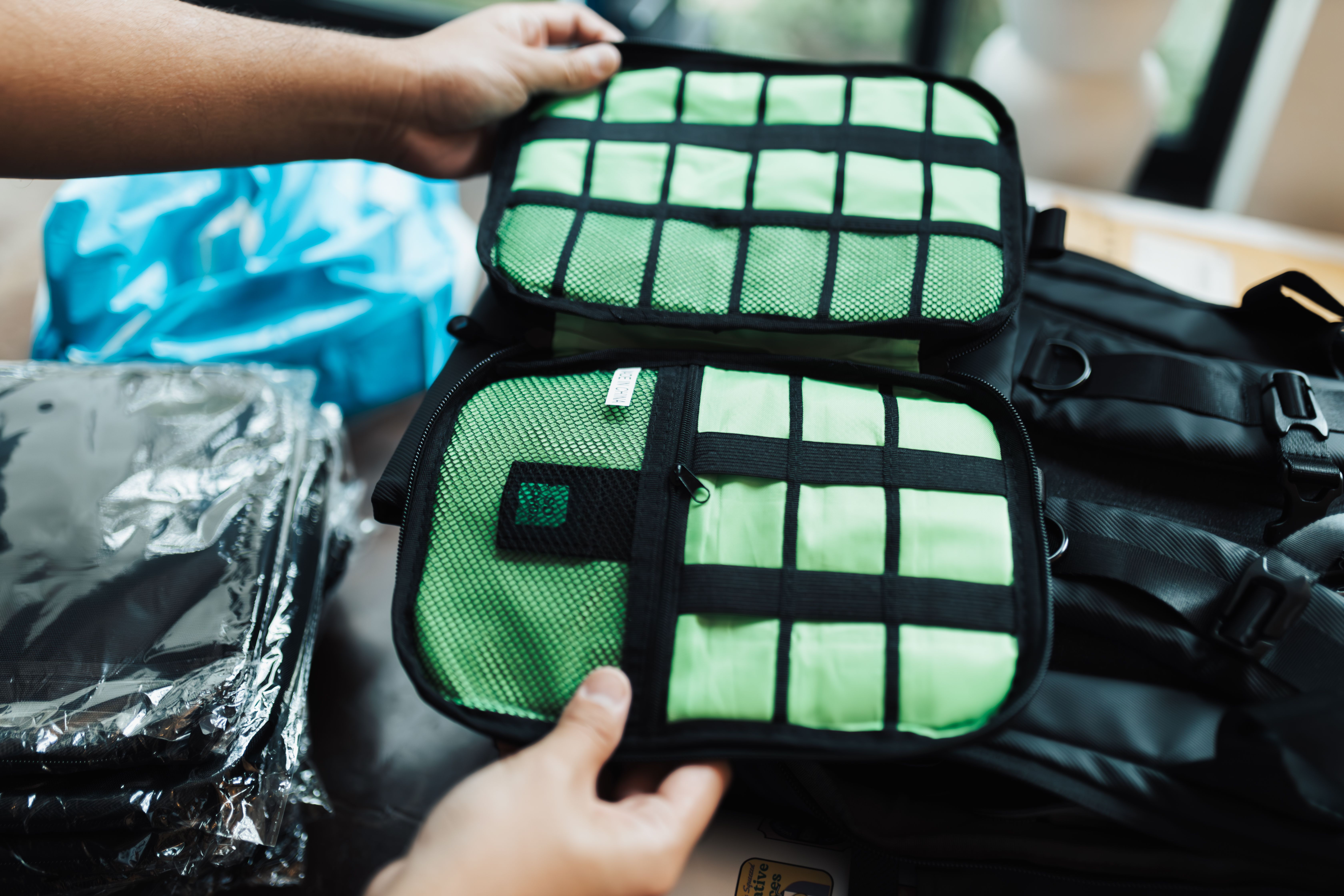
Compression organizers can reduce the space occupied by soft clothing, but they do not reduce the weight of what you pack. If the extra room encourages you to add more clothes, the finished bag can become heavier or exceed an airline’s size limit. Vacuum bags may also require a way to remove air and can be awkward to repack during a trip. For most holiday visits, a simple cube or laundry pouch may be enough.
If you are deciding between a regular cube and a compression version, ask what you need most: visible, grouped outfits or less bulk from soft layers. A compression zipper is useful only if it closes without forcing the seams and does not leave you with a hard-to-repack bundle. Neither type replaces checking the airline’s carry-on dimensions.
A crossbody bag or neck pillow: choose for your travel day
A small crossbody bag may keep a passport, phone, wallet, and boarding items within reach. Check its dimensions against the airline’s personal-item allowance, and make sure it sits comfortably when worn with the coat or backpack you plan to use. A neck pillow is more personal: the shape, support, and fabric that feel comfortable vary from one traveler to another. If you can, try the fit at home and buy from a seller with a clear return policy.
These are convenience purchases, not requirements. If your current backpack already keeps essentials accessible, another bag may add clutter. If you do not sleep sitting up, a travel pillow may take up more space than it saves in comfort.
Wait on a large suitcase only when you have time
Google’s historical U.S. pattern suggests late December clearance can bring lower prices on large luggage, sometimes with fewer styles or sizes left. If you are shopping for a trip months away and can be flexible, waiting may be reasonable. If you are flying this Thanksgiving, your existing bag is damaged, or you need a specific carry-on size, buy when you have enough time to compare measurements and return terms.
Airline size rules vary, and a bag that fits one carrier may not fit another. The FAA advises travelers to check with their airline about oversized luggage and notes that airline rules can be stricter than general guidance. Measure the bag including wheels and handles, then compare it with the carrier’s current policy and your fare. Our Away Carry-On vs. Monos Carry-On comparison explains the published dimensions and other differences between two standard hard-shell cases; it does not guarantee acceptance by any airline.
If you do shop, compare the full cost and practical terms: dimensions, empty weight, capacity, expansion, return window, warranty exclusions, delivery cutoff, and whether the price applies to the exact size you want. “Expandable” does not help if the expanded bag exceeds your airline’s limit. A long warranty also does not mean every type of damage is covered.
Keep flight-day essentials accessible
Before buying a toiletry pouch, confirm that your liquids fit the Transportation Security Administration’s carry-on screening guidance. TSA’s standard 3-1-1 rule limits carry-on liquids, gels, aerosols, creams, and pastes to containers of 3.4 ounces (100 milliliters) or less, placed in one quart-size clear bag per passenger. Rules and screening procedures can change, so check TSA’s current page before you leave. TSA travel tips and liquids guidance.
Keep spare lithium batteries and power banks in your carry-on, not checked luggage. If an airline gate-checks your carry-on, take those items out and keep them with you in the cabin. The FAA also advises checking airline-specific battery limits. FAA guidance on lithium batteries.
A simple buy-or-wait checklist
- Buy before the trip: replace damaged luggage, a missing pouch, or an organizer you know you will use; leave time to inspect it and return it if needed.
- Watch November deals: compare travel accessories and packing cubes, but buy only after checking size, construction, delivery, and return terms.
- Wait for late-December clearance: consider a large suitcase for a later trip if you can accept fewer choices and have a safe place to store it.
- Skip the upgrade: if your current bag and a small pouch already meet your needs, the most useful purchase may be nothing.
- Check official rules: confirm your airline’s baggage limits, TSA’s current screening guidance, and FAA battery rules before departure.
The most useful holiday travel purchase is the one that removes a real friction point from your trip. Use seasonal timing to compare prices, not to manufacture urgency. If an item does not fit your route, bag, airline, or budget, leave it on the shelf.
Sources checked October 24, 2026: Google’s 2026 holiday buying guide; Google’s 2026 holiday flight analysis; Google’s U.S. travel search recap; Travel + Leisure’s packing-cube tests, travel-organizer tests, and carry-on checklist; TSA travel tips; FAA PackSafe lithium-battery guidance.
General editorial guidance. No hands-on product testing or affiliate links are included.