
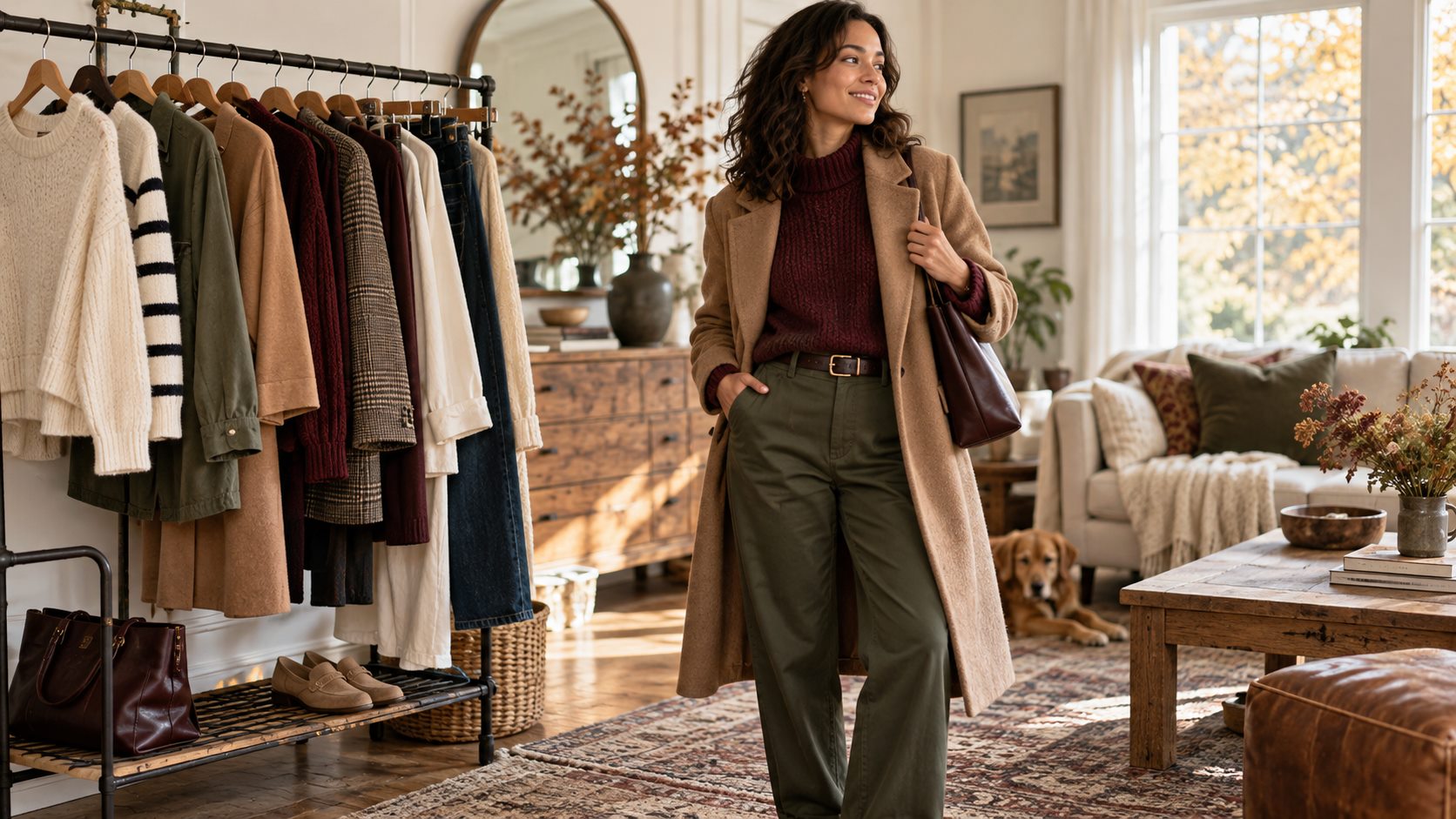
That first chilly walk to the car, followed by a warm office or shop, is the fall outfit puzzle: you need warmth outdoors and an easy way to cool down later. Layering solves it with a few pieces you can take off or add back, so start with your closet rather than a seasonal shopping list.
Recent fall runway coverage has highlighted thoughtful layering and styling as ways to refresh familiar pieces. That is a useful cue, not a shopping list. Start with what fits comfortably, works with the weather where you live, and already earns its place in your wardrobe. Vogue’s fall/winter 2026 trend report and Glamour’s practical fall layering guide both point to the versatility of layering; the ideas below translate that into an everyday closet.
Start with a comfortable base
Choose a base layer that feels good on its own: a tee, button-down, thin turtleneck, or lightweight long-sleeve top. Fit matters more than the label. If the base is already tight, adding a sweater can restrict movement; if it is very loose, several layers may bunch under a coat. Try sitting, reaching, and walking before deciding an outfit works.
Build a simple three-piece combination
A cardigan, overshirt, vest, or light sweater can add warmth without taking over the outfit. Then choose an outer layer that suits the forecast: a denim jacket for mild days, a rain shell for wet weather, or a warmer coat when temperatures call for it. Try one of these closet-first formulas: button-down under a sweater; tee under an open overshirt; or thin knit under a jacket. Vary the weight of the pieces instead of stacking several thick layers.
Use proportion to keep the outfit easy
If the top layers are roomy, try a straighter or slimmer bottom; if the outfit has a fitted top, a wider-leg trouser or flowing skirt can balance it. This is a styling option, not a body rule. The best proportion is the one that lets you move comfortably and feels like you.
Let color and texture do the updating
Before buying anything, make a small outfit set from pieces already in your closet. Pair a familiar neutral with one color you enjoy, or mix textures such as cotton, denim, wool, and corduroy. Repeating one color in shoes, a scarf, or a bag can make separate pieces feel connected. You do not need every seasonal color to build a fall outfit.
Plan for real temperatures
Fall can mean a cool morning, a warm afternoon, and a chilly evening. A removable layer is more useful than an outfit that only works at one temperature. Check the local forecast, consider rain and wind, and bring a compact layer when you will be out for long stretches. For an indoor commute, keep the outermost piece easy to carry or store.
Try a five-minute closet check
Lay out three tops, two mid-layers, and one outer layer you already own. Try a few combinations, take a quick photo, and note which ones work for your routine. If a gap appears, write down the specific job the missing item would do before shopping: “water-resistant layer for a rainy commute” is more useful than “something fall.” That small pause helps separate a real wardrobe need from a trend that looks appealing for a week.
The most useful fall wardrobe is not the one with the most layers. It is the one where a few comfortable pieces work together in changing weather and still feel like your own style.
Related guide: Read our guide to building a small, versatile wardrobe.
General editorial guidance. No hands-on product testing or affiliate links are included.